
What is a Scrum Master? Roles, responsibilities, and how to become one
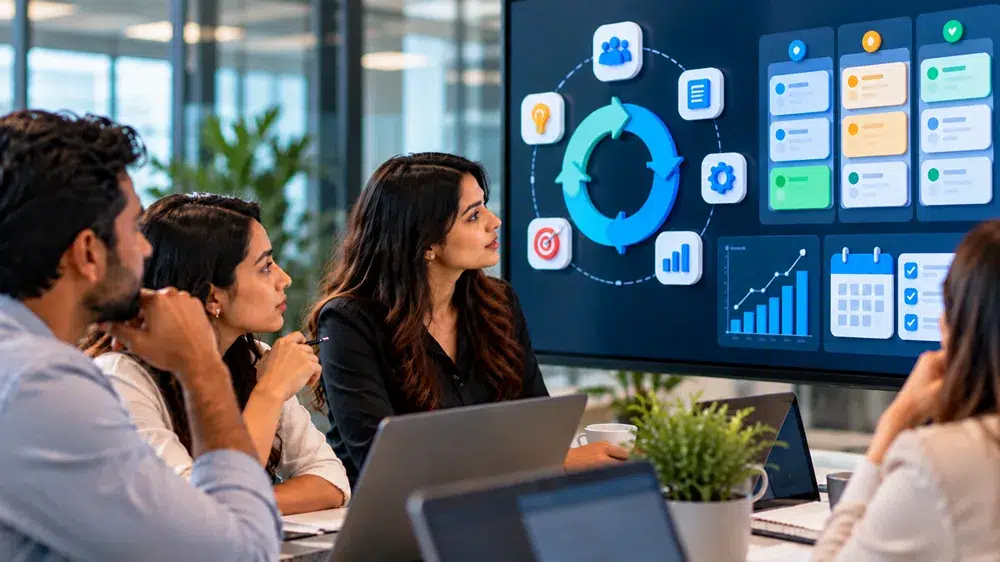
A Scrum Master is a facilitator, coach, and servant leader who helps a team apply the Scrum framework effectively. The role focuses on facilitating Scrum events, removing impediments, supporting collaboration, and helping the team improve.
As organizations adopt agile methodologies, Scrum Masters help teams stay focused, adapt to change, and work toward shared goals.
This guide covers the Scrum Master role, responsibilities, skills, certification options, and career path.
📌 Key takeaways
- A Scrum Master helps teams apply Scrum and improve continuously.
- Key responsibilities include facilitating events, removing impediments, and coaching teams.
- Essential skills include communication, facilitation, coaching, and agile knowledge.
- Becoming a Scrum Master involves learning Scrum and gaining practical experience.
- Freshers can build Scrum knowledge through hands-on experience.
- Certification demonstrates foundational knowledge but does not replace practical skills.
- Career paths include Senior Scrum Master, Agile Coach, and Project Manager.
Table of contents
1. What is a Scrum Master?2. What does a Scrum Master do? Roles and responsibilities
3. What skills do you need to become a Scrum Master?
4. How to become a Scrum Master?
5. Do you need a Scrum Master certification? Options to consider
6. Can a fresher become a Scrum Master?
7. Scrum Master salary and job outlook
8. Frequently asked questions
What is a Scrum Master?
A Scrum Master helps a team understand and apply the Scrum framework, principles, practices, and processes. Rather than managing tasks or directing team members, the role creates an environment where people can collaborate, make decisions, and take accountability.
The Scrum Master supports the team, Product Owner, and wider organization by facilitating collaboration, identifying impediments, and encouraging continuous improvement.
Software development teams widely use Scrum, and it can also apply to other settings that require a flexible approach to managing complex work.
What does a Scrum Master do? Roles and responsibilities
On a typical Sprint, the role of Scrum Master focuses on facilitation, coaching, removing impediments, and supporting the team.
Facilitates Scrum events
The Scrum Master ensures Scrum events take place, remain productive, and stay within their timeboxes. They help participants understand the purpose of each event and support the team in making effective use of them.
For example, the Daily Scrum is an opportunity for Developers to inspect progress toward the Sprint Goal and adapt their plan.
Supports the Product Owner
The Scrum Master helps the Product Owner with effective Product Goal definition and Product Backlog management. They also help the Scrum Team understand the need for clear and concise Product Backlog items.
Helps build an agile environment
The Scrum Master encourages collaboration, transparency, accountability, and continuous improvement. They also help address organizational or process issues that affect the ability of the team to work effectively.
Coaches the team
The Scrum Master helps the team identify and address obstacles such as dependencies, unclear processes, communication issues, or organizational barriers. Additionally, the Scrum Master coaches team members on Scrum, collaboration, and effective ways of working.
Through active listening and powerful questions, they help the team identify solutions and become more self-managing.
💡 Quick insight
The role requires strong observation and communication skills. A Scrum Master needs to notice team dynamics, listen to different perspectives, and adapt their approach to what the team needs at each stage.
What skills do you need to become a Scrum Master?
You do not need to know every technical detail of software development to become a Scrum Master. However, you need a strong understanding of the framework, agile principles, facilitation, teamwork, and communication.
Important skills include:
- Communication: Communicate clearly with team members, Product Owners, stakeholders, and other parts of the organization.
- Facilitation: Facilitate conversations, events, and decision-making without dominating the discussion.
- Active listening: Identify concerns, conflicts, impediments, and opportunities for improvement.
- Coaching: Support people in learning the framework and developing better ways of working through patience, curiosity, and useful questions.
- Problem-solving: Help teams work through dependencies, process challenges, unclear requirements, and other impediments.
- Collaboration and teamwork: Build trust and encourage team members to work toward a shared goal.
- Agile knowledge: Understand agile principles, practices, and how iterative processes support continuous improvement.
- Adaptability: Respond to new information without losing sight of team goals.
Technical knowledge can be useful, particularly in software development, but facilitation, coaching, communication, and servant leadership are central to the role.
How to become a Scrum Master?
If you are interested in becoming a Scrum Master, you can build your career through learning, practical experience, and relevant certifications.
1. Learn Scrum and agile fundamentals
Start by understanding what the Scrum methodology is, including its roles, events, principles, and how Sprints work. Learn how teams manage their work and use inspection, adaptation, and continuous improvement. It also helps to understand how Scrum fits within broader agile methodology.
2. Develop facilitation and coaching skills
Build skills in facilitation, active listening, conflict resolution, servant leadership, and coaching techniques. These skills help you support a team without taking over its work.
3. Gain practical experience
Look for opportunities to work with agile teams. This could involve participating in events, supporting team collaboration, helping track impediments, or contributing to process improvements.
4. Consider a Scrum certification
A certification can provide structured learning and demonstrate knowledge of the framework. Different certification paths are available depending on your career goals and preferred learning approach.
5. Build your career profile
Create a resume that highlights your Scrum knowledge, facilitation skills, teamwork, relevant projects, and practical experience. Include examples of how you have supported collaboration, solved problems, or contributed to process improvements.
6. Apply for Scrum Master opportunities
Once you have built foundational knowledge and relevant experience, explore Scrum Master jobs and related agile roles. Update your Scrum Master resume to highlight facilitation, teamwork, agile practices, project experience, problem-solving, and measurable improvements.
📌 Practical tip
Do not treat certification as the finish line. Look for ways to practice Scrum principles in real team settings, even through small projects, internships, or cross-functional work, and use those experiences to strengthen your career profile.
Do you need a Scrum Master certification? Options to consider
A Scrum Master certification is not the only way to enter the profession. Whether you need certification depends on your experience, career goals, and the requirements of the organization or job.
Certification can provide structured learning and demonstrate foundational knowledge, particularly for candidates transitioning into the role.
When evaluating a certification course, consider the curriculum, assessment approach, trainer experience, learning format, and recognition of the certification. This preparation can also help when answering Scrum Master interview questions and discussing real-world team situations.
Training from experienced Scrum trainers can also provide a structured learning experience. Certification should complement practical knowledge rather than replace it.
Can a fresher become a Scrum Master?
Yes, a fresher can work toward a Scrum Master career, but getting a Scrum Master role immediately can be challenging because many employers look for experience working with agile teams. Learning Scrum is an important first step, but being ready for the role also requires experience facilitating discussions, working with different team dynamics, and helping resolve real impediments.
Freshers can start by building Scrum knowledge through courses or certification and then look for opportunities to apply it. College projects, internships, volunteer work, or entry-level roles can provide settings to practise facilitation, participate in team discussions, support planning or retrospectives, and identify process improvements.
When applying for Scrum Master opportunities, use these experiences to show what you actually did, such as helping a team resolve an obstacle, facilitating a discussion, or contributing to a process improvement. This gives employers evidence of practical skills rather than only knowledge of the Scrum framework.
Scrum Master salary and job outlook
Scrum Master salaries in India vary based on experience, location, organization, industry, skills, and level of responsibility. Role-specific salary ranges can differ significantly across employers, so professionals should consider the scope of the role and their level of experience when evaluating compensation.
According to the EY Future of Pay 2026 report, overall salary increases in India are projected at 9.1% in 2026. The report projects salary increases of 9.2% in the Hi-Tech/Information Technology sector and 10.4% for Global Capability Centers (GCCs), providing current context for compensation trends in technology-related roles.
As Scrum Masters gain experience, they may take on more complex teams, programs, stakeholder responsibilities, and organizational change initiatives. This can support progression into roles such as Senior Scrum Master, Agile Coach, Delivery Manager, or Project Manager.
The broader technology market continues to create opportunities for professionals with digital, delivery, and collaboration skills. However, actual compensation and career progression depend on individual experience, skills, location, organization, and role scope.
Explore relevant opportunities on MyCareernet:
Explore Scrum Master Job Opportunities on MyCareernet
Explore more opportunities and take the next step in your career.
Sign up on MyCareernet →Take the next step in your Scrum Master career with MyCareernet
Building a career as a Scrum Master takes more than understanding the Scrum framework. You also need practical skills, relevant experience, and the right opportunities to apply what you know.
Whether you are a fresher starting your Agile journey or an experienced professional looking for your next opportunity, MyCareernet can help you move forward.
Sign up on MyCareernet to explore Scrum Master jobs, discover relevant career resources, and find opportunities that match your skills and experience.
Frequently asked questions
1. What tools do Scrum Masters commonly use?
Scrum Masters may use project management and collaboration tools to support Sprint planning, task tracking, communication, documentation, and progress visibility. The specific tools depend on the workflow and organization.
2. Scrum Master vs Project Manager: What is the difference?
A Scrum Master guides the team in applying the framework effectively through facilitation, impediment removal, and continuous improvement. A Project Manager typically focuses on project scope, timelines, resources, risks, and delivery.
The responsibilities may overlap depending on the organization.
3. Can a Scrum Master work without a technical background?
Yes. A Scrum Master does not need to be a software developer or technical specialist. Strong communication, facilitation, coaching, collaboration, and problem-solving skills are central to the role. Technical knowledge can still be useful when working with software development teams.
4. What is the difference between a Scrum Master and an Agile Coach?
A Scrum Master typically works closely with a team, helping it apply the framework effectively and improve its ways of working. An Agile Coach generally works at a broader level, supporting multiple teams, leaders, or the wider organization in adopting agile principles and practices.