
How to answer strengths and weaknesses in an interview with examples
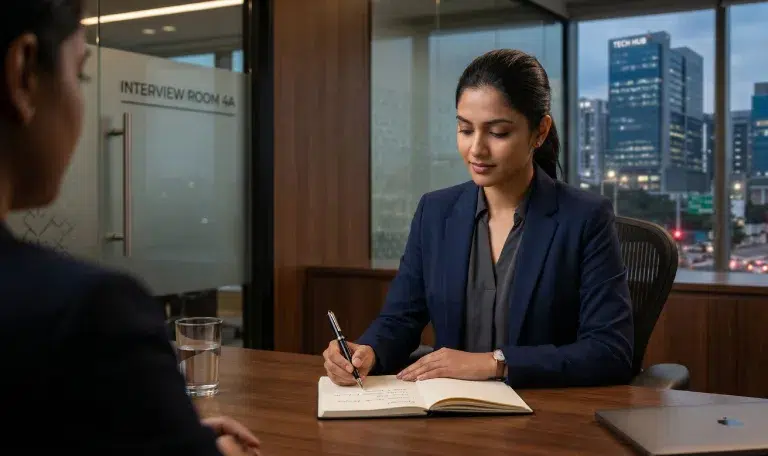
“What are your strengths and weaknesses?” is one of the most common interview questions, and also one of the most misunderstood.
Whether you are preparing for your first job or transitioning into a new job, this question can feel tricky. You do not want to sound overconfident, but you also don’t want to highlight a bad habit that hurts your chances.
If you have been searching for what is your weakness best answer, you are already a step ahead, because most candidates never think about how to frame it properly before walking in.
The truth is, hiring managers are not looking for perfection. They are trying to understand your self-awareness, your working style, and how well your skill set aligns with the job description.
Knowing your strengths for interview ahead of time, and having a clear way to communicate them, makes all the difference between a forgettable answer and one that sticks.
In this guide, you will learn exactly how to answer “What are your strengths and weaknesses?” with practical strategies, sample answers, and tips to help you feel confident in your next job interview.
Table of Contents
1. Why interviewers ask about strengths and weaknesses2. How to identify your strengths
3. How to identify your weaknesses
4. How to frame your strengths in an interview (with examples)
5. How to frame your weaknesses in an interview (with examples)
6. How can I practice answering strengths and weaknesses questions before the interview?
7. Common mistakes to avoid when discussing strengths and weaknesses
8. Frequently asked questions
Why interviewers ask about strengths and weaknesses
The "What are your strengths and weaknesses" section is actually one of the most insightful parts of an interview. A candidate who can honestly identify where they struggle and show they are willing to stand out far more than someone who pretends they have none.
Here is what hiring managers are specifically trying to understand:
- Does your work ethic fit the team and the role?
- Are you self-aware enough to recognise your own gaps?
- Do you take initiative and actively work on professional growth?
- Do your strengths match what the job actually needs?
- Do you demonstrate a strong growth mindset and commitment to improving?
- How honest and thoughtful is your answer?
This common interview question also helps interviewers assess your emotional intelligence. How you talk about your weaknesses—whether you are defensive, overly self-critical, or calm and reflective—tells them a lot about how you will handle feedback on the job. Remember, a positive attitude during this answer goes a long way in making a positive impression.
🎯 Quick fact
Employers consistently rank self-awareness among the most valued traits in a candidate. Being honest about your strengths and weaknesses directly signals that quality.
How to identify your strengths
Before you can confidently answer the "what's your strength" interview question, you need to do some honest self-reflection. Most people freeze when asked what is your strength in an interview because they have not given it enough importance.
Here is how to identify your real strengths before the interview:
Review your past performance
Think back to your previous job or academic projects. When did you deliver high-quality work? When did you solve a problem others could not? What did you do that made a difference? Those moments point directly to your strengths.
Ask people who have worked with you
Sometimes others can see your strengths more clearly than you can. A former manager, teammate, or mentor can give you a transparent, outside perspective on your particular top skills.
Match your strengths to the job description
Read the job description carefully and look for the qualities and skills they are prioritising. If they are looking for someone detail-oriented, and you are the person who always catches small details, that is a strength worth leading with. Your strengths match should feel natural and relevant, not forced.
Think about what comes easily to you
Skills and abilities that feel effortless to you, like solving problems quickly, staying focused under pressure, or bringing people together in group settings, are often your strongest assets.
When thinking about strengths for an interview, focus on qualities that are both genuine and directly relevant to the role. The most effective strengths for an interview are ones you can back up with a specific example, not just a label. Here are some that tend to resonate:
- Leadership skills and the ability to take initiative
- Problem-solving and the ability to find creative solutions
- Emotional intelligence and the ability to read group dynamics
- Time management and the ability to handle multiple projects
- Being detail-oriented with a focus on high-quality work
- Positive attitude that keeps teams motivated
Do not try to list multiple strengths without backing them up. Pick two or three that are genuinely yours and connect them to the role with an example.
💡 Quick tip
Write down three moments you are proud of from your academic or work life. Chances are, the same strength shows up in all three. That is your answer.
How to identify your weaknesses
The "What are your weaknesses?" interview question is the part most candidates dread, and the part where the most mistakes happen.
To find a weakness that is genuine but presented well, try this:
Look for repeated feedback
If more than one person—in a performance review, a group project, or casual feedback—has pointed out the same thing, that is likely a real pattern. Acknowledging it shows you are self-aware, not self-critical to a fault.
Notice what you avoid
Tasks you consistently put off or feel anxious about often signal skill gaps or weaknesses in your work ethic. That is useful material for your answer. Do not do negative self-talk, as it will make you more anxious.
Think about what slowed you down in your past work experiences
Were there moments where you had to put in extra effort just to keep up? What was the cause? Limited experience with a tool, difficulty delegating tasks, or trouble staying focused when managing different tasks at once?
Choose something real but manageable
Good weaknesses to mention include things like public speaking, delegating tasks, time management, lack of confidence, or difficulty working across groups. These are honest, relatable, and, importantly, things you can show you're actively working to improve.
Avoid the classic trap of disguising a strength as a weakness. Saying "I pay attention to small details" or "I just work too hard" signals to hiring managers that you are not being honest, which is the opposite of the impression you want to leave.
🎯 Quick fact
"I am a perfectionist" is the single most overused answer to the weakness question in job interviews. Hiring managers have heard it so many times that it has completely lost its impact, and often works against you.
📋 Quick self-check before interview
- ☑️ My strengths match the role
- ☑️ I have 1–2 strong examples
- ☑️ My weakness shows improvement
- ☑️ My answer is under 60 seconds
- ☑️ I sound natural, not scripted
How to frame your strengths in an interview (with examples)
Knowing what are your strengths is one thing, and communicating them in a way that lands is another. The best answers follow a simple structure:
Name the strength → Back it with a real example → Connect it to the job role
Sample answers:
Example 1: Problem-solving
"One of my greatest strengths is solving problems under pressure. In my previous work experience, a key client project ran into a major issue two days before the deadline. I stayed focused, mapped out what was still achievable, realigned the team, and we delivered on time without compromising quality. I think that ability to find creative solutions quickly will be a great asset in this role."
Example 2: Detail-oriented
"I am someone who naturally pays attention to small details. During a group project in my final year, I reviewed our data the night before submission and caught a calculation error that would have significantly affected our results. That kind of careful, attention to detail approach is something I bring to all my work, and I think it's especially relevant to this job."
Example 3: Leadership skills
"I tend to naturally take initiative in team settings, even when I am not the official lead. In my previous job, I noticed our team was losing time because we weren't all on the same page about project priorities. I introduced a weekly check-in that helped us manage multiple projects more smoothly. It became a standard part of our working style."
Example 4: For freshers
"Since I am just starting my career, my strengths are mostly from academic and extracurricular settings. In college, I was known for being the person who takes initiative in college projects, making sure we had a clear plan, dividing tasks fairly, and keeping everyone on the same page. I am excited to bring that same positive attitude and drive to my first job."
Always make sure your answer is relevant to what the interviewer is looking for. Strong sample answers feel specific, not generic.
💡 Quick tip
After giving your example, always end with a sentence that connects it to the role you are applying for. This one step makes your answer feel intentional rather than rehearsed.
How to frame your weaknesses in an interview (with examples)
Your answer to the "What is your weakness?" interview question really shows your self-awareness. The formula that works every time:
Name it honestly → Show its impact → Explain how you are improving
Sample answers:
Example 1: Public speaking
"My greatest weakness used to be public speaking. I am a naturally shy person, and presenting in front of large groups made me very anxious. I recognised it was affecting my professional growth, so I joined a group and started volunteering to lead smaller team updates. I feel confident now in small group settings, and I am actively working on larger presentations."
Example 2: Delegating tasks
"I have struggled with delegating tasks. I tend to take on too much myself because I want to make sure things are done to a high standard, but I have learned that this can slow down the team and is not a sustainable working style. I have been actively working on assigning tasks based on each person's strengths, and it has genuinely improved how our team operates."
Example 3: Self-criticism
"I can be quite self-critical when I make mistakes. I used to waste time going over errors instead of moving forward. I have been working on separating self-reflection, which is useful, from self-criticism that does not serve anyone. I now give myself a set amount of time to review what went wrong, note the lesson, and move on. It has helped me stay focused and productive."
Example 4: Time management (Freshers)
"As someone stepping into their first job, time management is something I am actively improving. In college, I sometimes left tasks too close to deadlines. Since then, I have started using time-blocking and project management tools to handle different tasks more efficiently and make sure I am not leaving things to the last minute."
Notice how every sample answer ends with active improvement, not just the weakness itself. That is what turns a potentially negative answer into a demonstration of a growth mindset.
🎯 Quick fact
Candidates who pair a weakness with a specific action they have taken to improve it are viewed as significantly more hireable than those who simply name their weaknesses. The pivot to growth is everything.
How can I practice answering strengths and weaknesses questions before the interview?
Knowing what to say and actually saying it well under pressure are very different things. Here is how to make sure you feel prepared and confident when it counts:
- Do a mock assessment: Platforms built for fresher jobs and interview preparation often offer structured mock interview tools where you get feedback on your responses. Use them. Treat every mock assessment like the real thing, dress up if it helps, time yourself, and answer out loud. You can also practice mock assessments here.
- Record yourself answering: It feels awkward, but it is one of the most effective ways to catch filler words, rushed answers, or nervous habits. Watching yourself helps you self-correct faster than any other method.
- Use the STAR method: Structure every example around Situation, Task, Action, and Result. This keeps your sample answers clear and stops you from rambling.
- Study interview questions: Look up role-specific and industry-specific interview questions and answers for freshers so you are not just preparing general answers. The more tailored your prep, the more confident you will feel on the day.
- Prepare for follow-up questions: Interviewers often push deeper, "Can you give another example?" or "What specifically are you doing about that weakness?" Have more than one example ready for each point.
- Work with a mentor or career counsellor: External feedback is invaluable when it comes to how to prepare for an interview. Someone who can observe you, not just listen, will catch things you will not notice yourself.
💡 Quick tip
Practice your answers out loud, not just in your head and time yourself when you practice. Saying something out loud is a completely different experience. It is where the real preparation happens and helps you make your answer concise.
Common mistakes to avoid when discussing strengths and weaknesses
Even candidates who have done solid preparation fall into these traps. Watch out for:
- Using a fake weakness: "I try to make everything perfect" is the most overused answer in every job interview. Hiring managers hear it constantly, and it signals that you are not being transparent, which creates exactly the wrong impression.
- Being too vague about strengths and weaknesses: "I am hardworking and a team player" tells a potential employer nothing useful. Every candidate says this. Use an example that shows your ability in action.
- Being overly self-critical: There is a difference between healthy self-awareness and listing every flaw you have ever had. Keep your answer to one or two weaknesses max, and always pivot to what you are actively doing about them.
- Forgetting to connect answers to the job: Your greatest strength should feel directly relevant to the position. If you are going for a detail-oriented role and you lead with something unrelated, you have missed the opportunity. Always make your answer relevant. Ask yourself before the interview, "Does this example actually connect to what they need?"
- Skipping examples entirely: Abstract claims are forgettable. Real examples from your past work experience, projects, or even personal life (especially for freshers with limited experience) make your answer credible and memorable.
- Showing no progress on your weakness: Mentioning your biggest weakness without showing you are actively improving signals complacency. Always end on forward momentum.
🎯 Quick fact
Studies show that interviewers form a strong impression within the first few minutes of meeting a candidate. How you answer the strengths and weaknesses question, usually asked early, plays a big role in that first impression.
Move to the next step in your career with MyCareernet
Getting your strengths and weaknesses right is just the beginning; the real goal is landing the right job.
With MyCareernet, you can:
- Find opportunities that match your skill set and job role
- Practice with mock assessments to master common interview questions
- Access tailored interview questions and answers for freshers
- Build confidence and create a strong, positive impression on potential employers
Apply for jobs at MyCareernet to prepare smarter and move one step closer to your dream career. Make sure to review our step-by-step resume guide to ensure your application stands out before you hit submit.
Frequently asked questions
1. How long should my answers about strengths and weaknesses be?
Aim for 60 to 90 seconds per answer. That is long enough to give a real example and show self-awareness, but short enough to stay alert and not lose the interviewer's attention. If you practise with mock assessments, you will naturally find the right length.
2. Can I give personal examples outside of work experience?
Absolutely, especially if you are applying as a fresher with limited professional experience. Examples from college projects, volunteering, sports teams, or even personal life situations are completely valid, as long as the insight is genuine and the example clearly demonstrates the skill or quality you are describing.
3. Should I give examples for every strength and weakness I mention?
Yes, always aim to. A strength or weakness mentioned without a real example feels like an empty claim. Examples are what make your answers believable and help the interviewer understand how you actually show up in real situations.

MyCareernet
Author
MyCareernet brings expert insights and tips to help job seekers crack interviews and grow their careers.