
Data analyst resume guide: Template, tips, and examples – 2026

Crafting a strong data analyst resume can feel challenging, especially with evolving tools and ATS systems filtering applications early in the process. Your resume needs to show the clarity of your thinking, the way you work with data, and the kind of insight you can deliver.
Hiring managers should be able to understand your approach to analysis and the value you add through data-driven decisions.
This guide covers the essentials you need to build a strong profile, including a practical data analyst resume template, clear data analyst resume examples, key skills, project ideas, optimisation tips, and recruiter guidance to help you prepare an effective, job ready resume.
Table of Contents
1. Why Every Data Analyst Needs a Standout Resume2. Steps to Craft a High-Impact Data Analyst Resume
3. Data Analyst Resume Sample
4. Data Analyst Resume for Freshers
5. Data Analyst Resume for Experienced Professionals
6. Optimisation Tips for ATS-Friendly Data Analyst Resume
7. Common Mistakes and How to Avoid Them
8. Frequently Asked Questions (FAQs)
Why every data analyst needs a standout resume
Every hiring manager reviewing your data analyst resume wants to answer one question:
“Can this candidate analyse data and deliver reliable, insightful results?”
A strong resume should make this clear immediately. It sets the tone for your analytical capability, the tools you are confident using, and the value you aim to bring through data-driven work.
A strong data analyst CV (or resume) helps establish this right away by:
Highlighting your technical expertise
Recruiters look for familiarity with data analysis tools, programming languages, data visualisation skills and experience handling large or complex data. Whether you work in marketing, finance, healthcare, product, HR, or BI, your resume should clearly signal your technical depth.
Showcasing your ability to deliver data-driven insights
A compelling resume goes beyond naming tools. It demonstrates your ability to extract, clean, model, and present data that supports data-driven decision-making.
Demonstrating you can work with cross-functional teams
Data analysts collaborate with product managers, business leaders, engineers, designers, and marketing teams. Your resume must highlight communication, stakeholder management, and storytelling abilities.
Positioning you for the right job title
From junior data analyst resume to senior data analyst resume, each role expects a different level of depth. Your resume must match that expectation.
Increasing your chances of passing ATS
Almost all large organisations screen resumes using ATS. Using relevant keywords, a clean data analyst resume format, and structured sections helps ensure your application gets shortlisted.
A standout data analyst resume is not just well-written, it is precisely aligned with the data analyst job description, showcases quantifiable achievements, and uses language that resonates with hiring managers.
Steps to craft a high-impact data analyst resume
A high impact data analyst resume should reflect the same clarity and structure you apply when working with data. Recruiters look for logical flow, relevant details, and a layout that highlights your strengths without clutter.
This is where an AI resume builder can help by organising projects, analytical skills, and business impact into a more structured resume narrative.
A clean, well organised format also improves ATS compatibility and helps hiring managers understand your profile quickly.
Below are the essential sections and what to include for each one.
Step 1- Contact information
This appears right at the top and should be simple, accurate, and professional. For data analyst roles, clear contact details also show basic attention to detail, which recruiters actively look for. Keep this section clean and minimal so nothing distracts from the core of your resume.
List the core details that help hiring teams verify and reach out with ease:
- Full name
- Phone number
- Professional email
- City and country (optional)
- LinkedIn profile
- Portfolio or GitHub link
- Personal website/dashboard link (if applicable)
Avoid including nicknames, informal or outdated email addresses, and personal social media links that are not relevant to your application.
Step 2 – Professional summary (data analyst resume summary / data analyst resume objective)
This section shapes a recruiter’s first impression within seconds. A strong summary or objective shows your confidence, clarity of purpose, and understanding of what a data analyst role requires. It helps hiring managers see your technical focus, the problems you can solve, and the value you aim to deliver through data-driven insights.
Think of it as a quick snapshot of your analytical approach. The way you present your experience, strengths, and intent often determines whether a recruiter continues reading your resume. Tailor this section based on your level of experience.
Data analyst resume summary (for experienced candidates)
A summary showcases your proven track record and experience. It should highlight the scale of data you have worked with, the tools you are confident in, and the type of business outcomes you have supported.
This is your opportunity to demonstrate how you have applied data analysis skills in real environments and how your insights have influenced decisions, improved processes or added measurable value.
Example:
“Detail-oriented data analyst with 3+ years of experience in transforming complex data into actionable insights. Skilled in SQL, Python, Tableau, and statistical analysis, with a proven track record of improving data processing time by 25 per cent. Adept at collaborating with cross-functional teams to drive data-driven decision-making.”
Data analyst resume objective (for freshers / entry-level)
An objective highlights your career intent and relevant training or academic background. For someone starting out, it is also a space to show curiosity, early exposure to data analysis, and the kind of problems you are keen to work on.
A clear objective helps recruiters understand your direction, the skills you are building, and how you hope to contribute as you begin your data analyst journey.
Example:
“Entry-level data analyst with strong foundations in Python, SQL, and data visualisation seeking to apply analytical abilities to support business decision-making. Passionate about leveraging data to solve real-world problems and deliver clear insights through dashboards and reports.”
You can strengthen this section further by reviewing how objectives and summaries are framed across roles. Resources such as Career Objective for Resume and What is Data Analyst Job can help you understand what recruiters expect and how to position your intent effectively.
Step 3 – Skills (technical and soft skills)
A high quality skills for data analyst resume section balances technical expertise and soft skills. Recruiters often scan this part first to understand your core strengths and to check if your capabilities match the tools, methods and collaboration style required for the role.
The way you group and prioritise your skills also shows your awareness of what a data analyst role involves, from handling raw data to communicating insights with clarity.
A well curated list helps hiring managers immediately see the areas where you can contribute and the level of proficiency you bring to the team.
| Technical Skills | Soft Skills |
|---|---|
|
|
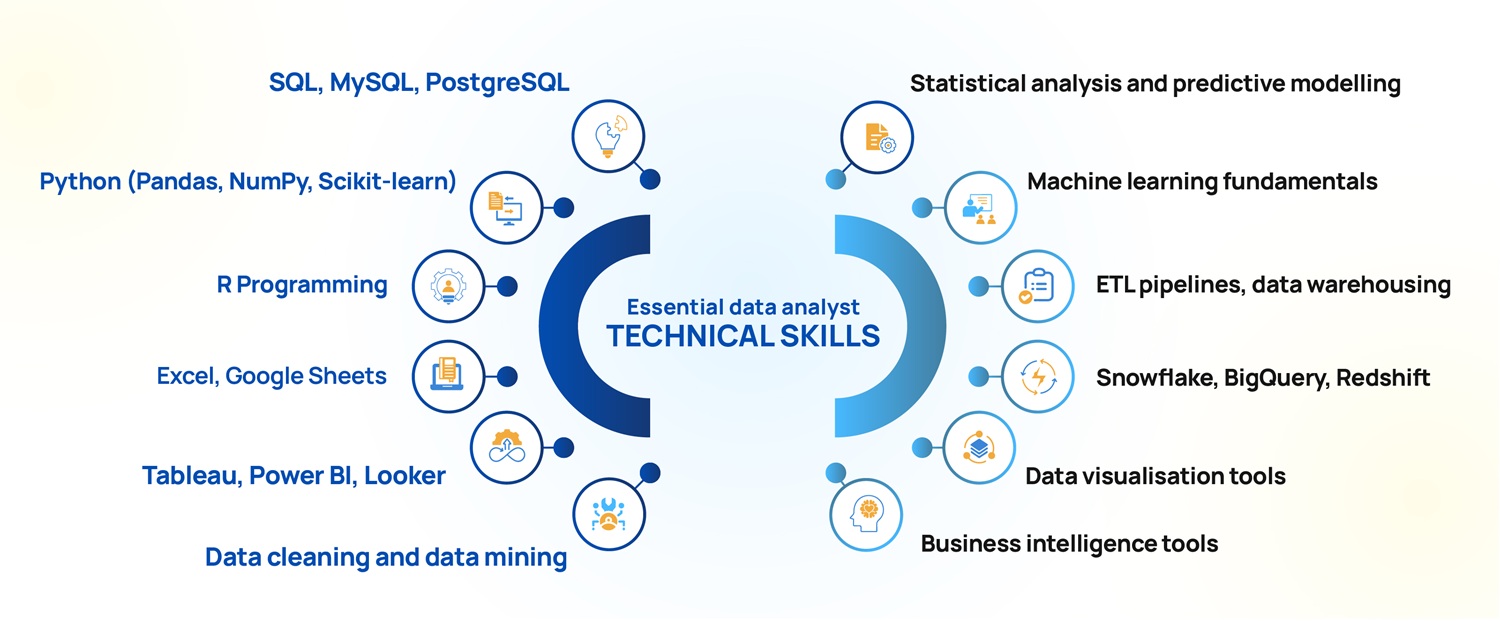
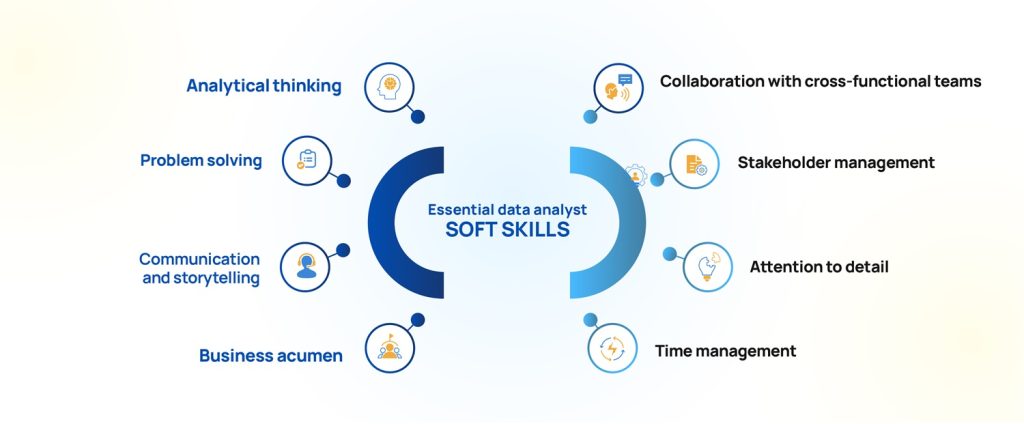
These represent relevant data analyst skills hiring managers expect in 2026. Keep this list tailored to the job posting.
Step 4 – How to write impactful work experience bullets
Hiring managers often read a data analyst’s experience the same way they review an insight report. They look for clarity, logic and evidence of how you think with data.
This means your bullets work best when they show the problem you engaged with, the analytical choices you made, and the value that followed. It is less about listing tasks and more about showing the reasoning and impact behind your work.
A simple way to frame each bullet is to highlight:
- The analytical challenge you addressed
- The approach or tools you chose and why
- The improvement, insight or measurable outcome
This style helps recruiters understand not only what you did but how you think, which is often the real differentiator in a data analyst role.
Example bullets:
- Analysed customer feedback data to identify trends, improving product satisfaction scores by 18 per cent.
- Built automated dashboards using Tableau to reduce manual reporting time by 30 per cent.
- Wrote optimised SQL queries to extract and clean datasets of 500K+ rows, reducing data processing time by 40 per cent.
- Collaborated with marketing teams to generate actionable insights for campaign optimisation, increasing ROI by 22 per cent.
- Applied statistical methods to forecast demand, improving inventory planning accuracy.
Include relevant data analysis experience, even if it comes from internships or part-time roles.
Step 5 – Education
List your education clearly, along with relevant coursework. For a data analyst resume, this section helps recruiters understand the academic foundation behind your analytical skills, especially if you are a fresher or transitioning into data analytics.
Including modules related to statistics, programming, data visualization, database management or machine learning gives hiring managers a quick view of the concepts you have already been exposed to.
This is also a good place to highlight strong academic projects or research work that demonstrates your ability to analyse data and present insights using data visualization tools.
Make sure to include the following details:
- Degree
- University
- Year of completion
- Key modules (statistics, programming, data mining, ML, visualisation)
You can also explore Best Resume Formats and How to Write a Resume if you want additional clarity on presenting your educational background effectively.
Step 6 – Certifications and awards
Strong credentials can elevate your data analyst resume by showing that you have invested time in structured learning and skill development.
Highlighting recognised courses or achievements helps recruiters understand the level of preparation you bring and the tools or methods you have already worked with.
For entry level candidates, these details offer additional assurance of capability, especially when formal experience is still building.
Examples:
- Google Data Analytics Certificate
- Microsoft Power BI Data Analyst
- IBM Data Science
- AWS Data Analytics
- Certified Business Analyst Professional
- Tableau Desktop Specialist
Step 7 – Portfolio and project highlights
Your data projects often speak louder than your work experience. They show how you approach real datasets, apply analytical methods and use data visualization tools to communicate insights clearly.
Well presented projects can demonstrate initiative, technical range, and your ability to turn raw information into meaningful conclusions, which is essential for any data analyst role.
Including portfolio links or GitHub repositories also adds transparency and helps hiring managers evaluate your practical skills with confidence.
Examples of data analyst projects for resume:
- Built a sales forecasting model using Python (Pandas, Scikit-learn)
- Analysed customer churn data and developed predictive insights
- Designed an interactive dashboard using Tableau or Power BI
- Cleaned and transformed a large open-source dataset
- Performed sentiment analysis on social media data
- Conducted A/B testing for marketing campaigns
Attach links to dashboards, GitHub repositories, or case studies.
Once you have selected the right projects to highlight, the next step is to present them within a clear and organised resume. The sample below shows how this can look in practice.
Data analyst resume sample
Below is a clean, ATS-friendly example.
Name
City, Country | Phone Number | Email | LinkedIn | GitHub
Professional summary
Data analyst with strong expertise in SQL, Python, Tableau and statistical analysis. Proven ability to analyse large datasets, extract insights, and deliver reports that support data-driven decision-making.
Skills
Technical skills: SQL, Python, Tableau, Excel, Power BI, statistical analysis, predictive modelling, ETL, Data cleaning
Soft skills: Communication, problem-solving, business acumen, collaboration, stakeholder management
Experience
Data analyst – ABC company
- Cleaned and analysed datasets of 1M+ rows to identify growth opportunities
- Built automated dashboards reducing reporting time by 35 per cent
- Supported business teams by translating complex data insights into clear recommendations
Education
B.Sc. in Computer Science
Coursework: Statistics, Data Mining, Visualisation, Machine Learning
Certifications
Google Data Analytics | Power BI Analyst
Projects
- Predictive modelling for churn
- Sales dashboard using Tableau
- Customer segmentation using K-means
Data analyst resume for freshers
For freshers or entry level candidates, your resume should focus on the skills, coursework and projects that show your readiness to work with data. Highlight the tools you have practised, the problems you have explored through academic or personal projects, and any hands on exposure to data analysis or data visualisation.
Even without full time experience, a clear demonstration of how you think with data can make your profile stand out.
At the entry level, focus on:
- Academic projects
- Certifications
- Internships
- Coursework
- Tools you have actually used
- A strong data analyst resume objective
Sample points:
- Built a data dashboard analysing student performance across 12 parameters
- Cleaned and visualised a dataset of 5,000+ rows using Python
- Conducted statistical analysis for a research project
If you are ready to apply, you can browse roles through Data Analyst Jobs or on Find Jobs on MyCareernet.
As you move into roles with greater responsibility, your resume should demonstrate the scope of your work and the results you have delivered.
Data analyst resume for experience
Experienced data analysts should use their resume to highlight the depth of their analytical work, the scale of datasets they have handled, and the business impact of their insights. Recruiters look for evidence of ownership, problem solving, and the ability to work independently within cross functional teams.
Emphasising measurable outcomes, advanced tools, and the strategic value of your analysis can help position you strongly for mid level or senior data analyst roles.
You can strengthen this section by highlighting:
- Leadership or mentorship
- Process improvement
- Strategic impact
- Working with senior stakeholders
- Handling large and complex datasets
- Business outcomes
Sample points:
- Led a team of 3 analysts to design forecasting models improving demand prediction by 28 per cent
- Automated BI pipelines using SQL and Python reducing turnaround time from 3 days to 6 hours
- Presented insights to senior leadership influencing quarterly planning
Strong content is only effective if the ATS can interpret it correctly, which makes optimisation the next essential step.
Optimisation tips for ATS for data analyst resume
As a data analyst, you work with systems that rely on structured, accurate inputs. ATS works the same way. When your resume is formatted cleanly and uses the right signals, the system can interpret your skills correctly, and pass your profile to a recruiter.
To make your resume ATS-friendly:
- Use a simple data analyst resume template
- Avoid tables, columns, and graphics that ATS cannot parse
- Use exact keywords from the job description
- Add job title variations (Data Analyst, Business Data Analyst, Financial Data Analyst etc.)
- Use action verbs: analysed, modelled, visualised, predicted, cleaned
- Save as PDF unless instructed otherwise
For more detailed ATS guidance, you can refer to the ATS Friendly Resume resource.
Optimisation gets your resume through the system, but avoiding key mistakes ensures it makes a strong impression when a recruiter reads it.
Common mistakes and how to avoid them
Even strong applications can lose impact if the resume is not structured well or if key details are presented in the wrong way. Data analyst resumes are expected to balance technical depth, clarity, and relevance, so overlooking small details can affect how your profile is perceived.
Being aware of common mistakes helps you refine your resume and present your skills with confidence.
- Listing tools you cannot use confidently
- Writing a generic summary without keywords
- Not quantifying impact
- Adding too many unrelated skills
- Overloading the resume with technical terms but no outcomes
- Ignoring business context
- Using paragraphs instead of bullet points
A well-crafted resume positions you strongly in the job market, and the next step is connecting with the right opportunities.
Turn your data skills into career opportunities with MyCareernet
Writing a compelling resume is only the first step. To put your skills into action, MyCareernet helps you:
- Apply to data analyst jobs across industries
- Take part in skill challenges and hiring events
- Build your portfolio with real-world problem statements
- Connect with recruiters and industry mentors
👉 Register now on MyCareernet for free and transform your data analyst resume into real-world opportunities.
If you still have questions as you refine your resume, the FAQs below offer quick clarity on what hiring managers expect.
Frequently asked questions
Include contact information, a professional summary or objective, skills, work experience, education, certifications, and projects.
These sections give recruiters a complete view of your technical strengths, analytical approach and the real work you have done, whether through internships, coursework or full time roles.
Aim for one page if you are a fresher or early in your data analytics career. Experienced professionals can extend to two pages if they have substantial project work, measurable achievements or complex data analysis experience that deserves space.
Skills like SQL, Python, statistical analysis, data cleaning, and data visualisation are essential. Add communication and business acumen as well, because data analysts must explain insights clearly and support decision making. Choose skills that reflect your real abilities and match the job description.
Use a resume objective if you are a fresher or transitioning into data analytics. It helps show intent and areas of interest. Use a summary if you already have experience and can highlight your track record, tools you use confidently, and the impact of your insights.
Use keywords from the job description, keep your layout simple, avoid tables and columns, and use bullet points for clarity. Make sure job titles and skills such as SQL, Python, Excel or Tableau appear exactly as mentioned in the posting so the ATS can recognise them.
Include projects that involve analysis, visualisation, predictive modelling or dashboards. Projects like sales forecasting, churn analysis, customer segmentation, data cleaning pipelines or KPI dashboards help show your practical experience and your ability to apply tools to real data.
Freshers can use a hybrid or functional resume format to highlight skills and projects if work experience is limited. Experienced analysts should choose a chronological format that clearly shows progression, responsibilities and the scale of data analysis they have handled.
Recruiters assess technical skills, business understanding, measurable outcomes, clarity of communication, and relevance to the data analyst role. They look for evidence that you can work with data confidently, collaborate with teams, and turn findings into actionable insights.

MyCareernet
Author
MyCareernet brings expert insights and tips to help job seekers crack interviews and grow their careers.